As global pressure mounts for businesses to report and reduce their carbon footprint, organizations need robust tools to measure, manage, and disclose emissions. Choosing carbon accounting software is no longer a minor IT decision—it’s a strategic move that impacts compliance, reputation, and long-term sustainability goals.
Many companies still rely on manual spreadsheets. But as reporting standards like the GHG Protocol and regulations, such as the EU’s CSRD or California’s SB 253 and SB 261, become stricter, scalable digital solutions are essential. The right software streamlines data collection, automates calculations, and generates audit-ready reports. But with dozens of platforms on the market, how do you make the right choice?
Defining Your Needs: The First Step in Choosing Carbon Accounting Software
Before comparing features or requesting demos, clarify your organization’s requirements. Consider:
- Scope of Reporting: Will you report only on Scope 1 & 2 emissions, or include Scope 3 (value chain) as well? (Learn more about GHG emission scopes).
- Industry-Specific Needs: Do you operate in a sector with unique reporting demands (e.g., manufacturing, finance, retail)?
- Scale of Operations: Are you tracking emissions for a single site or a global enterprise?
- Integration: What existing systems (ERP, HR, procurement) must the carbon accounting platform connect with?
Tip: Involve stakeholders from sustainability, finance, and IT early to capture all requirements.
Carbon Software Selection Criteria: What to Look For
Once you know your organizational needs, evaluate potential software using these key carbon software selection criteria:
1. Data Accuracy and Methodology
The platform should align with recognized standards like the GHG Protocol or ISO 14064. Look for:
- Transparent calculation methodologies
- Up-to-date emissions factor libraries
- Audit-friendly data trails
2. Automation and Integration Capabilities
Manual data entry is time-consuming and error-prone. The best platforms automate data collection by:
- Integrating with utility providers, procurement, and travel management systems
- Offering APIs for custom connections
- Validating data for anomalies
3. Reporting and Disclosure Features
Choose a system that simplifies compliance with frameworks such as CDP, TCFD, or the SEC’s climate disclosure rules.
- Pre-built reporting templates
- Customizable dashboards
- Easy export to PDF, Excel, or XBRL
4. Scalability and Flexibility
Your sustainability journey will evolve. Select software that accommodates growth:
- – Multi-entity and multi-site capabilities
- – Support for new emission sources or regions
- – Modular features for future needs
5. User Experience and Support
An intuitive interface boosts adoption. Also, look for:
- Comprehensive onboarding and training
- Responsive customer support
- Community forums or knowledge bases
Long-Term Considerations in Carbon Software Selection
Selecting a platform is not just about meeting today’s needs. Consider:
- Vendor Track Record: How long has the provider been in business? What is their client retention rate?
- Regulatory Agility: Can the software adapt quickly to new regulations or standards?
- Pricing Model: Does it fit your budget and scale with usage?
- Security & Data Privacy: Especially critical for multinational organizations handling sensitive operational data.
Steps to a Successful Selection Process
- Identify Stakeholders: Sustainability, finance, IT, and procurement all have a voice.
- Shortlist Based on Criteria: Use the carbon software selection criteria above.
- Request Demos and Trials: Test usability, integration, and reporting.
- Check References: Speak with industry peers about their experiences.
- Negotiate Contracts and SLAs: Ensure service and support meet your expectations.
The Bottom Line: Choosing Carbon Accounting Software for Future Success
Choosing carbon accounting software is a pivotal decision for any organization committed to credible climate action. The right platform not only ensures regulatory compliance but also empowers teams to make data-driven sustainability decisions.
As you move forward, remember: clarity about your needs, careful evaluation against robust selection criteria, and a focus on long-term fit will set your organization up for success.
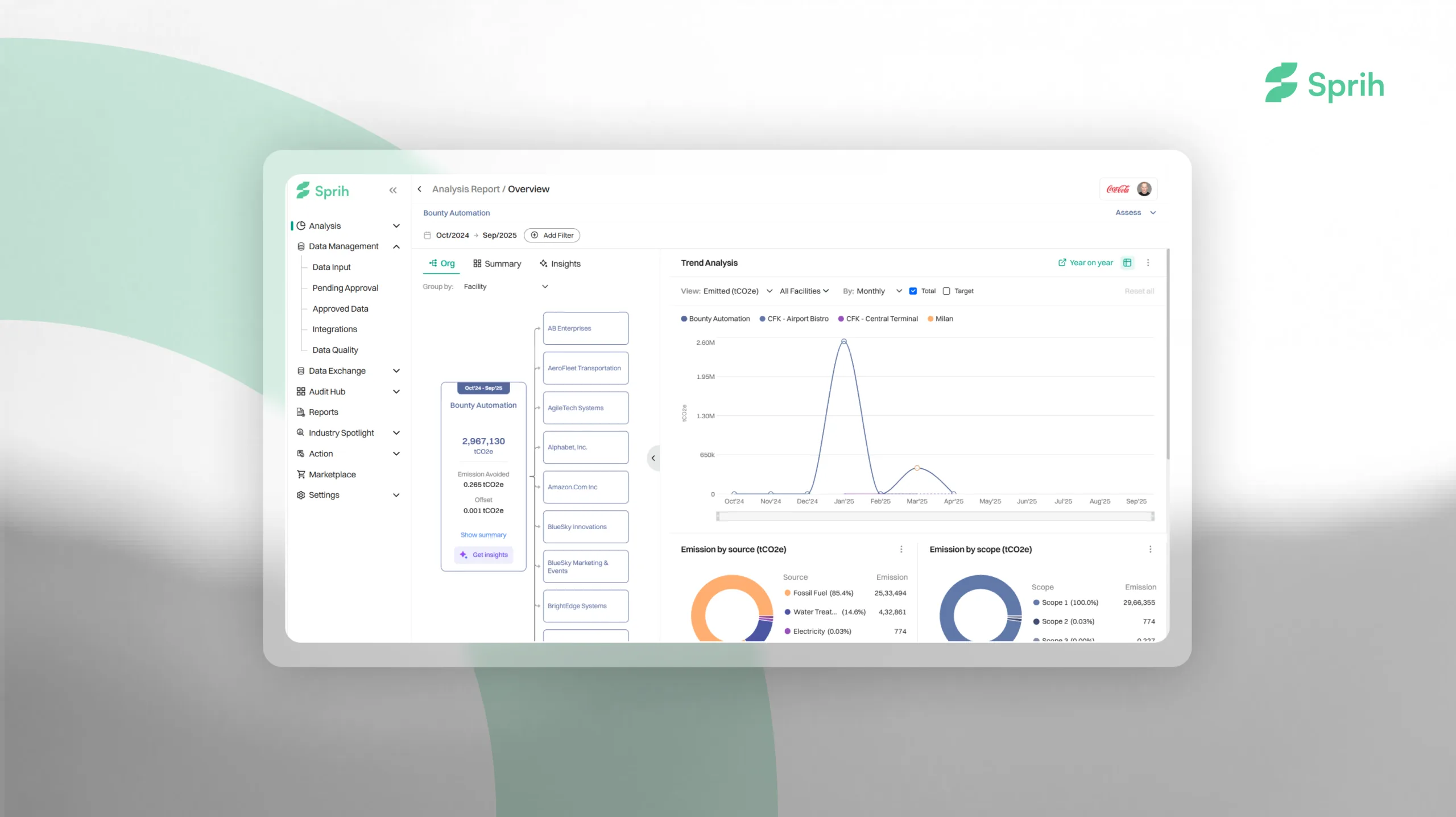
See how Sprih helps organizations simplify carbon accounting and accelerate sustainability progress—Book a demo today!